

A history worth preserving...

Dr Charlie Lynch, Research Affiliate at the Centre for Gender History at the University of Glasgow spent time researching our rich and diverse history for an article in The National.
We’re so excited to see The SWI represented in a national newspaper, giving people the opportunity to learn about ‘The Rural’ and the vital role it has played in supporting rural Scottish women.
A history worth preserving…
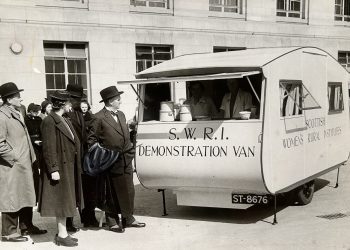
In 1917, a year before the end of of organisation for Scottish women was founded in the village of Longniddry, East Lothian. Catherine Blair was a suffragette and farmer who, keenly aware of problems affecting women who lived in the countryside, was inspired to set up the Scottish Rural Women’s Institutes (SWRI). It was the Scottish branch of a movement which had emerged in Canada. The SWRI, or, as it became colloquially known, “The Rural”, was intended to combat female isolation in the countryside. This isolation, Blair later wrote, was difficult for later generations to comprehend. It was caused by the difficulty of road travel in many parts of the countryside, and by women’s domestic lives, which confined them to their homes. Historian Valerie Wright has explained that Blair, in spearheading the establishment of the institutes, intended them to provide a “substitute” for “social co-operation” in the workplace, which men benefited from while women were denied access.
The Rurals
The SWRI was set up with an egalitarian and democratic model – although this was somewhat limited by existing social conditions. It was also a secular movement, its nearest religious equivalent being the Church of Scotland’s Women’s Guild. Only two subjects were explicitly banned from its meetings – “party politics and sectarian religion”. Blair also intended that the organisation would help “break down social barriers” and “give scope to the woman of ideas”, with those possessed of more cultural and social capital expected to lead in organising educational activities within their institutes. “The most successful,” she wrote in her 1940 book, Rural Journey, “are those which are informal and unconventional, where members are encouraged to express their views and to take part in all discussions of business.” The SWRI grew rapidly in its early years, quickly gaining momentum, with branches founded across the country, and by its peak in the 1950s “The Rural” had about 50,000 members, making it perhaps the largest women’s movement there has been in Scotland. Much emphasis was placed on domestic creativity. The institutes were the product of and catered to a society in which women were anticipated to be homemakers, sometimes in challenging economic conditions. The decoration and furnishing of homes was a perennial preoccupation, and one which was, until her death in 1946, was ably directed by Blair, whose own dwellings were artistically arranged.
The SWRI’s magazine, Home and Country, was regularly filled with interior decorating and furnishing ideas and methods, while Blair’s own speciality was pottery. The cheerfully decorated “Mak’Merry” pottery she and her associates created, partly to fund the SWRI, is now highly collectable. Blair was a believer in a philosophy of “craft reveals talent” in which creativity was credited with transformative powers upon women’s lives. These included developing confidence, fostering greater independence and helping cope with health conditions. “The creative faculty,” Blair wrote, “is a joy and its exercise helps soothe the mind. Apart from the intrinsic value of the craft work, having created something is of great value to the individual.” One result of this focus upon crafts was that the SWRI accumulated a large quantity of specimens for patterns and inspiration which served as teaching aids. The SWRI endured through the 20th century and into the 21st. Latterly much diminished in membership, in 2015, it changed its name to the Scottish Women’s Institutes (SWI), allowing for the incorporation of urban branches. Membership is increasing again and new institutes are being founded across Scotland.
Today, the SWI is the custodian of more than 100 years’ worth of heritage. Its heritage co-ordinator, Dr Valentina Bold, an ethnologist and historian, said:
“We are working with members across Scotland to develop oral histories to record memories and experiences, to digitalise and catalogue our very substantial archive, and to share these findings through outreach and dissemination. “The oral history project is quite pioneering in some ways. Certainly, I’ve never worked before on a national scale like this, and we are training volunteers in all aspects of oral history working. “One of the really novel aspects of what we are doing is our skills transfer workshops, which are about using our expert member tutors to work with younger women from outside the movement to pass on heritage craft skills. “It’s very much about actively working, and we’ve been collaborating with the Young Women’s Movement and Dundee International Women’s Centre. At the moment, we have about 60 trained volunteers. We’ve held events in places including Edinburgh, Perth, Muir of Ord and Kirkwall.” Part-funded by the Heritage Lottery Fund, the project is running until early 2027. “We’re a small team,” Bold says, “but we’re ambitious.” The SWI is working with the Ballast Trust, Scotland’s business archive preservation service, to catalogue their collection, and digitalise parts of it. Bold says: “For example, we’ve been working on digitalising a complete run of Home and Country Magazine, which started in the 1930s. selected cookery ‘We are digitalising books, many of which have wonderful annotations from the publications committee, and also minutes, some of which contain very spirited discussions going back to the late 1910s.”
I visited the Ballast Trust to speak to Bold and saw the sheer quantity of the SWI’s archive, with box after box brought from the shelves filled with magazines, books, papers and even textiles. It includes a large quantity of lectures and talks recorded onto vinyl records, which were dispatched to institutes across Scotland and which had been stored in the SWI’s office in Edinburgh. In the early 1940s, Blair observed the eclectic nature of what audiences at institutes might want to listen to. An audience “comprised almost entirely of the wives of miners and farm workers” was enthused by a lecture given by a speaker on the work of Norwegian playwright Ibsen, and requested more talks of that kind. Bold adds: “We also have complete sets of slides which were used for teaching and textiles which were made by members, including a very large tapestry made by Catherine Blair and which featured on the cover of her book Rural Journey.”
These boxes of papers, magazines, records and fabrics comprise the tangible heritage of an organisation. But what value does it all have? Bold says: “It documents a movement that was about empowering women, and I think it still is. “For our members it’s about a sense of why the SWI is important, and for non-members it’s about discovering exactly the same thing. “The SWI was about demanding educational opportunities and about passing on heritage crafts in a sociable way that bypassed class structures and barriers to interactions in everyday life. There’s a lot to learn about the way the Scottish Women’s Institutes operated.”
Dr Charlie Lynch thanks Dr Valentina Bold and the staff of the Scottish Women’s Institutes for their help with this article



)